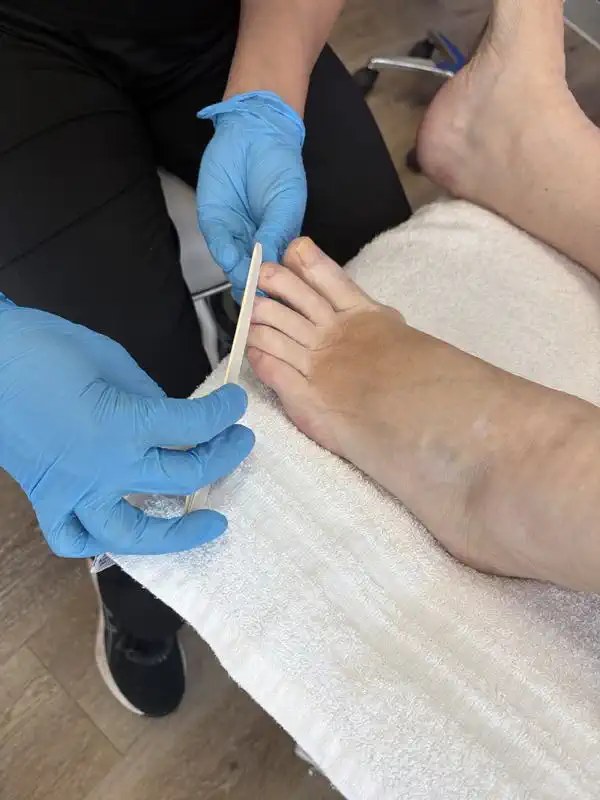
The biggest difference between a waterless pedicure and a traditional pedicure is what happens before the nail work begins. A traditional appointment often starts with a foot soak. A waterless pedicure prepares the feet without a soaking basin, but it can still include cleansing, nail grooming, skin care and polish.
At Refined Pedicure in Toronto and Barrie, our DryForm preparation uses warm towels rather than a traditional shared footbath. Here's what changes, what stays the same and what to consider when choosing a service.
Waterless vs. traditional pedicures at a glance
- Traditional soaking pedicure: Usually starts with the feet immersed in a footbath or basin.
- Waterless pedicure: Skips the soaking basin and uses another cleansing method, such as our warm-towel preparation.
- Both: Can include professional esthetic toenail and foot grooming, according to the booked service.
- Polish: May be included with either preparation method. The service description determines the finish.
- Hygiene: Depends on the salon's overall tool, equipment, product, towel and surface practices, not the service name alone.
What happens during a waterless pedicure?
A waterless appointment is not simply a shorter pedicure with fewer steps. At Refined Pedicure, the technician begins with warm towels and professional cleansing products rather than a footbath. Nail shaping, cuticle grooming and attention to appropriate rough areas follow according to the service booked.
The finish is your choice. Essential and Essential Max have a natural, polish-free finish; Classic and Deluxe include polish. To see the full process, read what happens during a waterless pedicure.
Is a waterless pedicure always safer?
Not automatically. Avoiding a soaking tub eliminates the need to clean and disinfect that particular piece of equipment, but the studio must still maintain appropriate tool reprocessing, fresh or properly handled linens, clean work surfaces and safe product handling.
A traditional salon can also operate responsibly with correctly cleaned and disinfected footbaths. The City of Toronto explains that clients should look for proper hygiene practices during manicures and pedicures. Ontario Regulation 136/18 sets requirements for personal service settings, regardless of whether the service uses a footbath.
For a useful independent reference, see Toronto Public Health: Manicures and Pedicures and Ontario Regulation 136/18.
Does waterless mean your feet are never cleaned with water?
No. Waterless refers to the absence of a traditional soaking bath. Warm towels and cleansing still form part of the experience at Refined Pedicure. It also does not mean you should skip washing your feet at home.
Is polish included?
Waterless describes preparation, not the final look. Some clients want a neat natural result, while others enjoy colour. We offer both types of finish. You can use the service names and descriptions to decide without assuming all waterless pedicures are polish-free.
If you prefer no polish, see our Essential vs. Essential Max comparison. It explains the difference in appointment time and included massage.
What should you ask a salon before booking?
- Which steps are included in this specific appointment?
- How are tools and surfaces cleaned and handled between clients?
- Will I receive polish, a natural finish or a choice?
- How long does the booked service take?
- What should I do before arriving, including whether existing gel polish must be removed?
Asking these questions can tell you more about the service than the phrase dry, waterless or traditional on its own. If you have pain, infection or another medical concern, an esthetic pedicure is not a substitute for an assessment by a regulated healthcare professional.
Waterless pedicures in Toronto and Barrie
Refined Pedicure offers waterless appointments at our Toronto studio and Barrie studio. Browse the service menu, try our Pedicure Finder or request an appointment online. Your request is confirmed subject to technician availability.
This article covers esthetic pedicure preparation and does not make medical safety guarantees.